
How can water quality in mining-impacted areas be monitored efficiently and continuously? Within GoldenRAM, this challenge is addressed by combining in situ measurements with Earth Observation (EO) data and AI-driven tools.
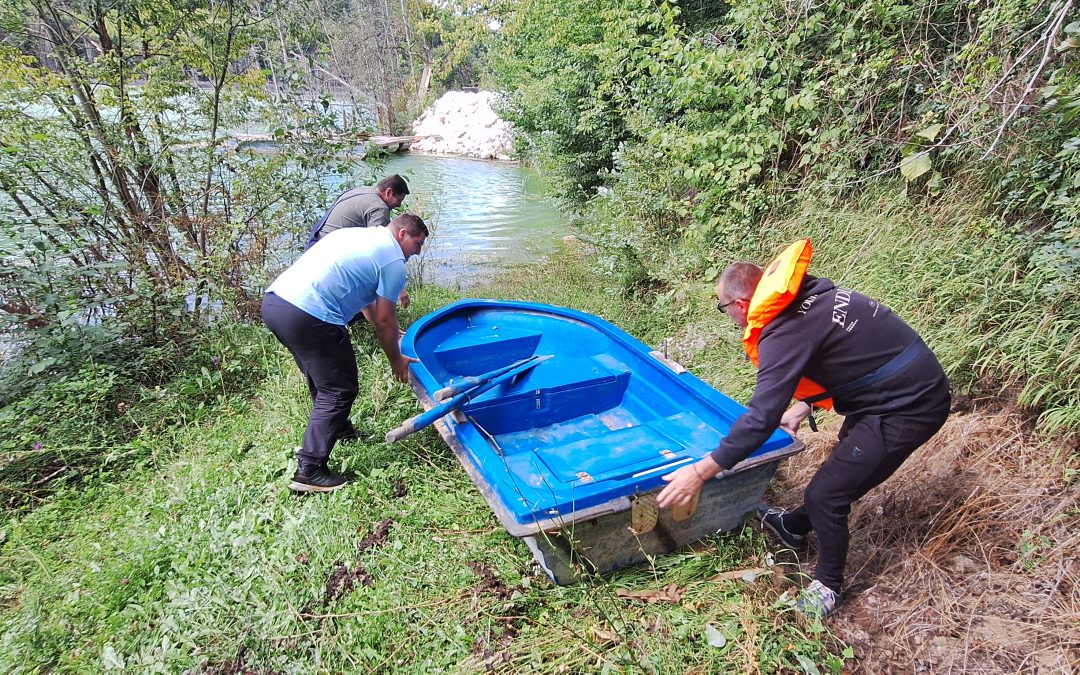
In August 2025, a field campaign was conducted at the Valea Șesei tailings pond near Abrud, Romania, in collaboration with partners from CUPRUMIN and the Technical University of Cluj-Napoca (UTCN). VTT was involved in planning the field campaign. The aim was to assess potential environmental impacts from mining activities and support the development of scalable monitoring approaches.
Field Measurements and Sampling Strategy
Sampling points were established along surface water pathways surrounding the tailings facility, targeting areas most likely to reflect the influence of mining-related discharge. At each location, key water quality parameters were measured, including pH, conductivity, turbidity, and dissolved metals.
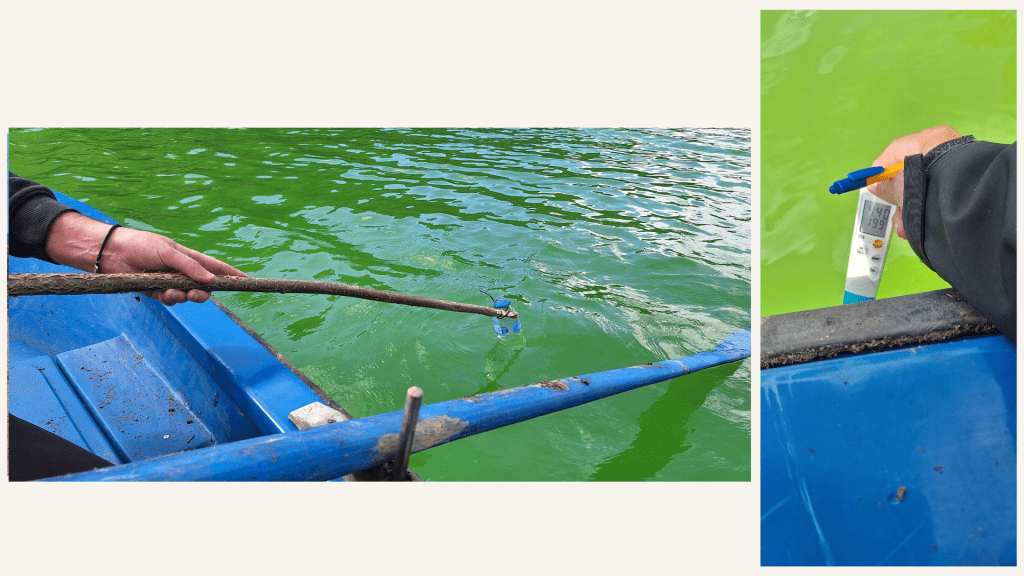
Water quality measurements in Abrud – August 2025, Dorel Gusat and UTCN colleagues
Measurements were carried out both in situ, capturing immediate conditions such as pH and temperature, and through laboratory analysis for more detailed chemical characterisation. This combined approach ensures both rapid assessment and analytical accuracy.
Linking Field Data with EO and AI Tools
The collected data feeds directly into the GoldenRAM platform, where it is integrated with satellite observations. Using the AIKP (AI Knowledge Pack), water quality indicators can be analysed and visualised in conjunction with Sentinel-2 imagery.
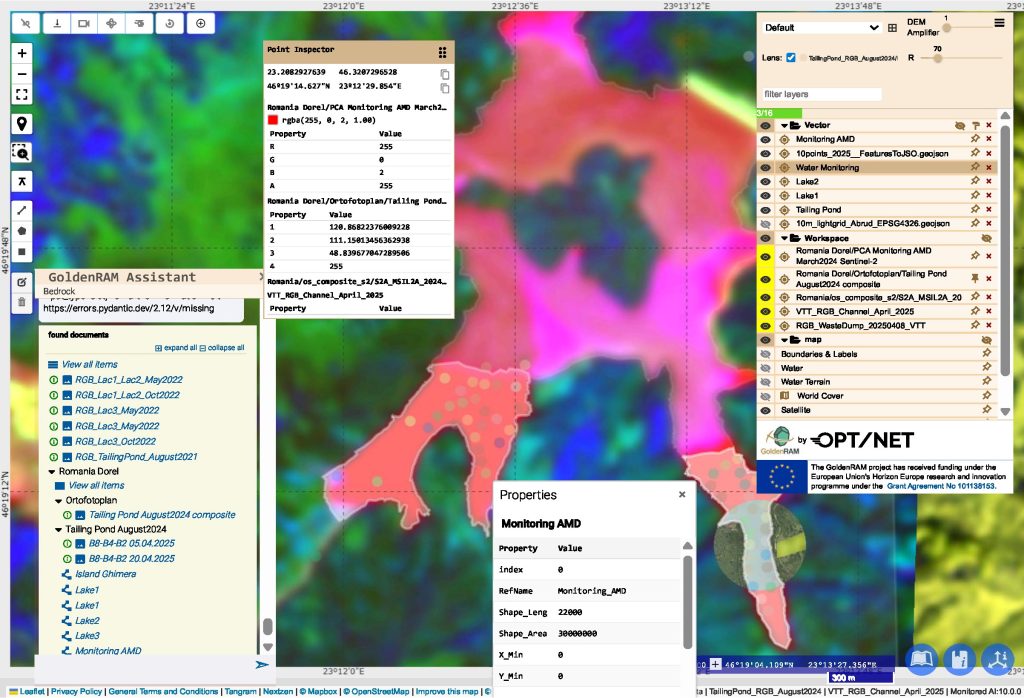
AIKP result of ocli.pro.aikp.pca.sentinel_2 with points of monitoring measurements. Using the lens option, the user can focus the inspection on the lake
Advanced processing methods, such as principal component analysis (PCA), allow patterns and anomalies to be identified across the monitored area. Interactive tools, including the “lens” feature, enable users to focus on specific zones—such as the tailings pond itself—for more detailed inspection.
Acknowledgements
The field campaign was made possible through the collaboration of GoldenRAM partners CUPRUMIN who allowed site access and operational support, and UTCN colleagues who contributed to field measurements and data collection.